


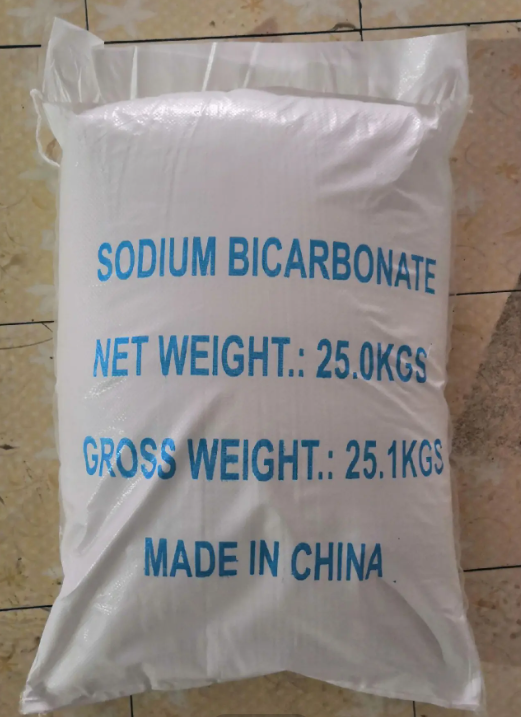
Description
Baking soda can be used for desulfurization.
Baking soda desulfurization technology mainly uses powdered sodium bicarbonate (baking soda) as a desulfurizer,
which reacts chemically with acidic gases such as sulfur dioxide (SO2) in flue gas under accidental temperature conditions to produce sodium salts such as sodium sulfate,
thereby achieving the purpose of desulfurization.
The quality indicators of baking soda are carefully divided into three types: food grade, industrial grade and feed grade.
Among them, food grade and industrial grade baking soda are particularly widely used in the field of flue gas desulfurization agents.
The quality purity requirements of food grade baking soda are extremely high, which must reach 99.0%-100.5%,
and the chloride ion content must be strictly controlled below 0.4%.
The quality purity of Class I industrial grade baking soda is required to be ≥99.5%, and its chloride ion content must also be ≤0.1%.
Application of baking soda (sodium bicarbonate) in flue gas desulfurization
The sodium-based dry desulfurization process is an advanced process that uses baking soda (NaHCO3) as a desulfurizer.
Under the action of high-temperature flue gas, baking soda is activated, and a microporous structure like popcorn is formed on the surface.
The flue gas in the flue is fully in contact with the activated desulfurizer, and a chemical reaction occurs. SO2 and other acidic media in the flue gas are absorbed and purified.
The desulfurized and dried NA2SO4 byproduct enters the bag filter with the airflow and is captured.
In this process, the main reactions are:2NaHCO3(S) = Na2CO3(s)+H2O(g)+CO2(g)
At the same time, SO2 in the flue gas reacts with Na2CO3 and oxygen to generate Na2SO4 (s) and CO2 (g), which is a key step in desulfurization. Side reactions may also occur.
Reviews
There are no reviews yet.